


Home sets
15 kWh SunESS Sunwoda Energy Storage + 10 kW 3‑Phase Solis Inverter
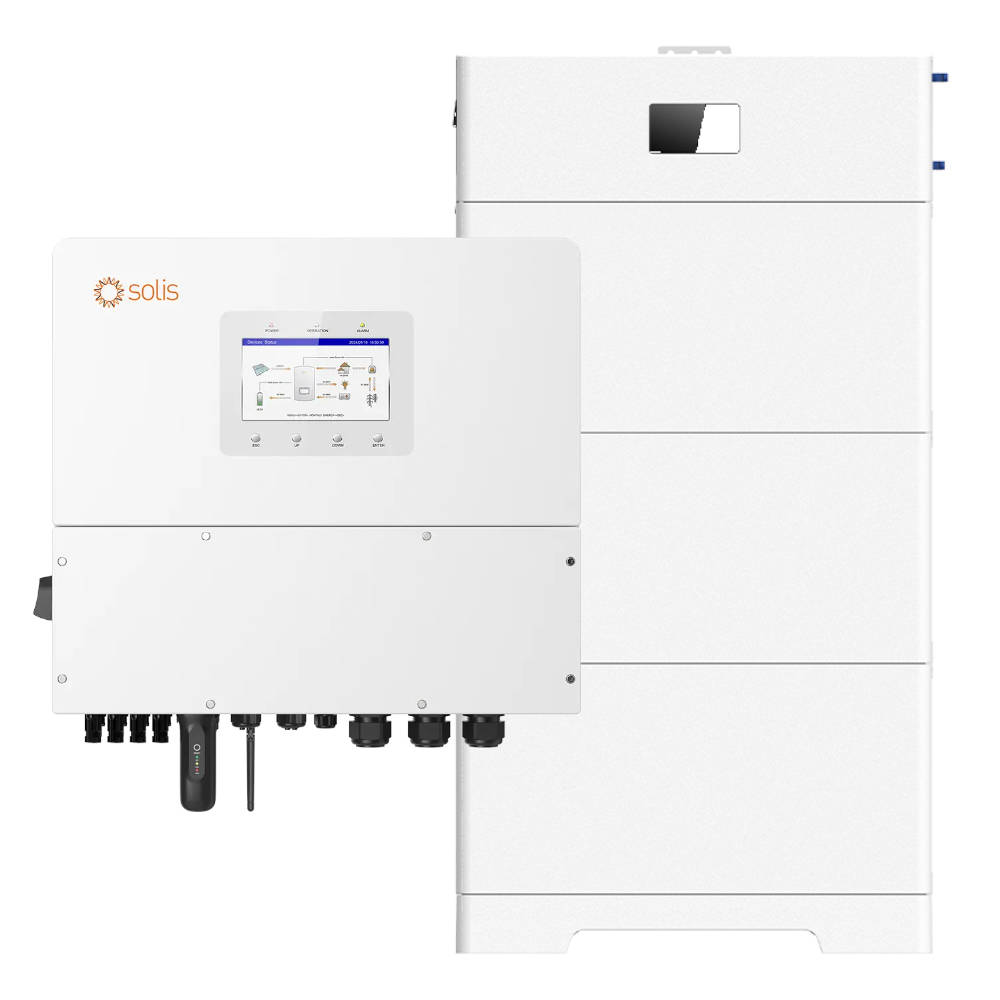
Manufacturer: Solis
INDEX: SUN15KHEU15

Energy storage kit with a Solis S6-EH3P15K-H inverter (15 kW) and a set of Sunwoda SunESS batteries with 5 kWh each is a Plug & Play solution – which means it can become part of any new installation. The system is easy to configure and can be configured remotely.
Kit contents: 15 kWh Sunwoda energy storage + S6-EH3P15K-H 15 kW 3-phase Solis:
- 1 x Hybrid inverter S6-EH3P15K-H 15 kW 3-phase Solis
- 3 x Battery module SunESS-H 5 kWh Sunwoda
- 1 x BMS module for the SunESS-H Sunwoda set
Three-phase hybrid inverter Solis S6 K-H combined with batteries is a modern and reliable device using the capabilities of a photovoltaic system to store surplus electrical energy for later, efficient and optimised use within a household. It works with high-voltage batteries made using lithium-ion technology. The inverter automatically adapts to the connected batteries, ensuring that the energy storage system operates efficiently and effectively. Inverters S6 K-H can operate in parallel connection up to 6 devices in one system. The operation of the entire installation can be monitored in a dedicated mobile app.
5 kWh battery module, model B40012DP03 is intended for building Sunwoda SunESS-H energy storage systems. This high-voltage battery is made in LFP technology with a usable capacity of 4.5 kWh and a charge/discharge power of 2.5 kW. It operates in the 350 - 450 V voltage range, and its service life reaches 6000 cycles. Up to 4 batteries can be connected in one set. It works with the dedicated control unit H0K6050P03.
Energy storage systems (BESS) are devices that store electrical energy in batteries and release it when it is most needed. In practice, they work like a “buffer” between production (e.g. from photovoltaics) and consumption in a building or facility. This means the energy does not have to be used at the exact moment it is produced.
Storing surplus energy – why and how does it work?
In PV systems, it is common that during the day production is higher than current consumption. This creates energy surpluses which, without storage, are fed into the grid (or – with limitations/zero-export – are “cut off”, i.e. lost). An energy storage system allows you to keep these surpluses on site and use them later, for example:
- in the evening and at night, when PV is no longer producing,
- in the morning, before the system starts operating at full power,
- during consumption peaks (e.g. machine start-up, heating, air conditioning),
- during power outages (if the system has a back-up/EPS function).
The effect is simple: you export less energy to the grid and consume more on site – when you actually need it.
Self-consumption – why does it matter so much?
Self-consumption is the share of produced energy (e.g. by PV) that you use directly in your facility or indirectly from the storage system. The higher the self-consumption, the:
-
lower the electricity bill, because you buy less from the grid,
-
higher the profitability of the PV system, because more kWh “work” for you,
-
lower sensitivity to changes in energy prices and distribution charges,
-
better power supply stability (especially when an emergency function is included).
In many cases, self-consumption is key to the economics of the entire PV + storage system, because energy used on site is usually more valuable than energy “exported” to the grid.
| Communication type: | RS485, GPRS optional, WiFi optional, CAN, Ethernet optional, Bluetooth |
|---|
| Maximum short-circuit current per MPPT [A]: | 30 |
|---|---|
| Number of strings: | 4 |
| Max. voltage [V]: | 1000 |
| Min. MPPT voltage [V]: | 200 |
| Max. MPPT voltage [V]: | 850 |
| Initial feed-in voltage [V]: | 160 |
| Max. current [A]: | 20 |
| Number of MPPT inputs: | 4 |
| Power [W]: | 15000 |
|---|---|
| Feed-in phases: | 3 |
| Max. output current [A]: | 22.8 |
| AC output voltage [V]: | 400 |
| Max. efficiency [%]: | 97.7 |
|---|
| DC battery operating voltage [V]: | HV |
|---|---|
| Battery technology: | LFP |