


Industrial kits
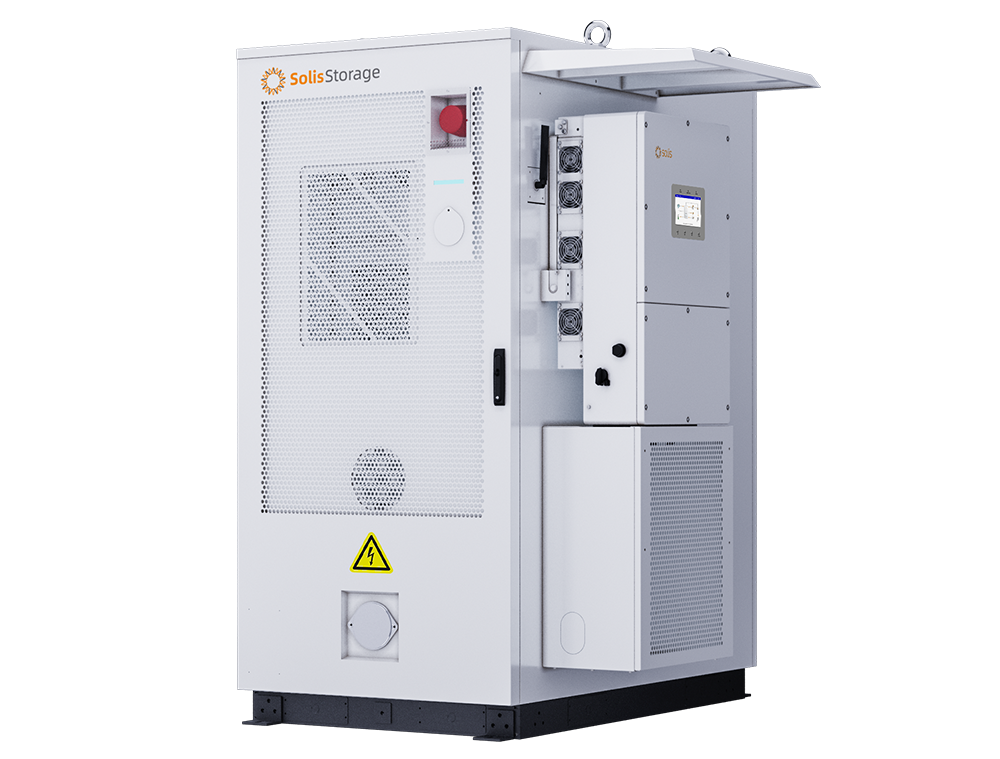
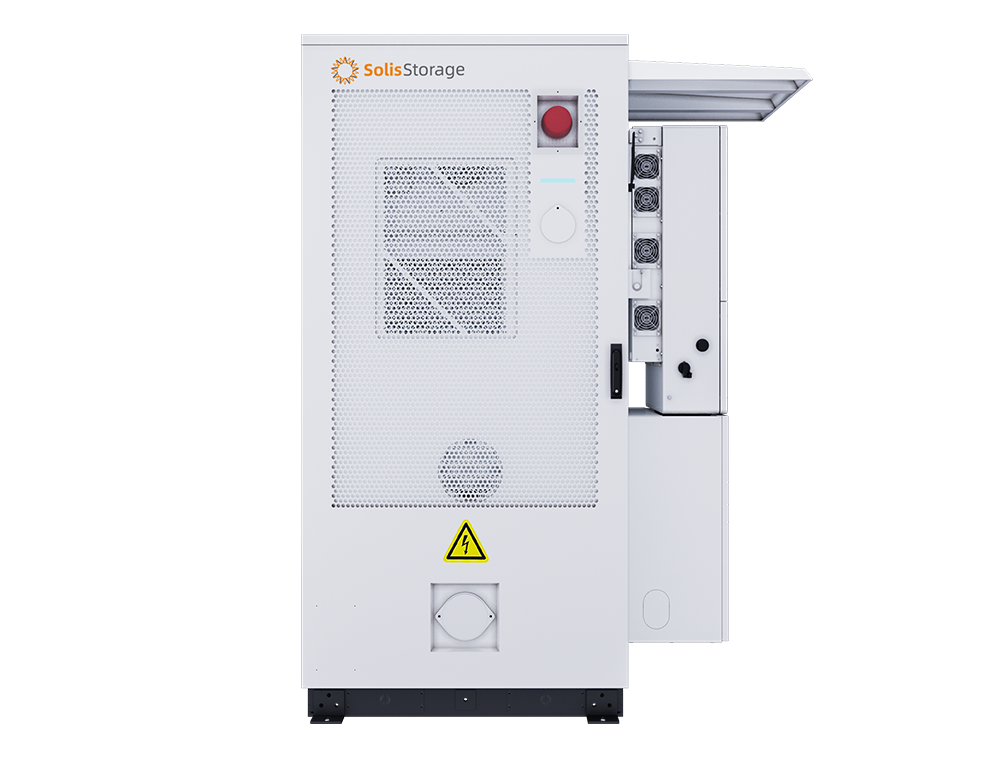
Energy storage system EverCore NV 120 kWh-60 kW Solis
Manufacturer: Solis
INDEX: EverCore120kWh-60kW

EverCore NV is an integrated, cabinet-type energy storage system designed for commercial and industrial (C&I) sites. It combines an LFP (LiFePO4) battery with a hybrid inverter and a direct PV input, allowing it to operate both as a system for self-consumption optimisation and as a backup power source for critical loads.
The system is available in the following variants: 100 kWh / 50 kW, 120 kWh / 60 kW and 261 kWh / 125 kW. This makes it easy to match the unit to the site’s needs – from smaller PV systems and loads to applications with higher demand (e.g. EV charging).
What can it be used for and where?
- Peak shaving and peak power reduction (lower demand charges and a more stable grid connection load)
- Maximising PV self-consumption (charging from PV, discharging during high demand periods)
- Tariff arbitrage (charging during cheaper hours, discharging during more expensive hours)
- Emergency power / UPS for critical loads – backup switching in ≤10 ms
- New and existing PV installations (retrofits and upgrades – quick integration with an already operating PV system)
- Sites: industrial halls and warehouses, office buildings, retail, EV charging stations, farms, small microgrids
Benefits and advantages of EverCore NV
- Direct PV input and PV oversizing capability – higher energy yield and fewer system components, which typically simplifies installation and reduces costs
- AC/DC separation – physical and electrical separation of AC and DC paths for improved safety and a more “PV-friendly” installation approach
- Fast backup (≤10 ms) – seamless power support for sensitive loads (IT, automation, cold storage, processes)
- Industrial durability – IP55 enclosure (cabinet) and IP66 inverter, plus operation across a wide temperature range
- Multi-layer safety architecture – continuous monitoring at cell, pack and system level, plus integrated fire-protection elements
- Grid-ready operation – ability to support power-quality functions (e.g. reactive power compensation) and potential integration for services such as FFR/FCR (depending on market and configuration)
Note: the availability of grid functions and services depends on configuration, local requirements and the grid operator’s conditions.
Selected technical parameters
- Rated capacity: 100.5 / 120.6 / 261.2 kWh (usable: 99.3 / 119.2 / 258.3 kWh)
- AC power: 50 / 60 / 125 kW, 3-phase, 380/400 V, 50/60 Hz
- PV: up to 100 kW (50/60 kW variants) or up to 250 kW (125 kW variant), max. PV voltage 1000 V
- Battery: LFP (LiFePO4) 3.2 V / 314 Ah; cell lifetime: up to 8000 cycles (SOH 70%)
- Backup: switching < 10 ms; parallel operation (off-grid) up to 10 units
- Operating conditions: -25…+55°C; humidity ≤95% (non-condensing); altitude up to 4000 m
- Communication: WiFi/LAN/Bluetooth, CAN (BMS/parallel), RS485 (meter), optional 4G
- Safety: as standard incl. aerosol fire suppression, explosion relief valve, fire-water inlet, audible/visual alarm; options: combustible gas detector, decompression panel, Ex fan
Key product features
- 120 kWh in a single cabinet + 60 kW inverter
- Direct PV input and hybrid operation with new/existing installations
- Backup/UPS ≤10 ms for critical loads
- LFP battery (LiFePO4) – high durability and safety
- IP55 (cabinet) + IP66 (inverter) – designed for industrial environments
- Integrated fire-protection elements and multi-level diagnostics
- Parallel operation up to 10 units (off-grid)
C&I energy storage systems – what are they and why do they make sense?
C&I (Commercial & Industrial) energy storage systems are designed for businesses and facilities with higher, often variable electricity demand (manufacturing halls, warehouses, retail, office buildings, cold stores, EV charging hubs). Unlike residential batteries, C&I systems are built to deliver measurable operating savings: reducing peak demand (peak shaving), increasing PV self-consumption, tariff arbitrage, and stabilising operation where grid connection limits apply. An additional benefit is backup power for critical processes where fast transfer and continuity matter. As a result, a C&I battery becomes more than just “storage” – it is a tool for managing energy cost, downtime risk and power quality at the site.
| Weight [kg]: | 1630 |
|---|---|
| Dimensions [mm]: | 1250 x 2030 x 1540 |
| EPS rated power [VA]: | 60000 |
|---|---|
| Maximum short-circuit current per MPPT [A]: | 60 |
| Rated AC power [W]: | 60000 |
| Weight of the inverter [kg]: | 76 |
| Max. voltage [V]: | 1000 |
| Min. MPPT voltage [V]: | 150 |
| Max. MPPT voltage [V]: | 850 |
| Initial feed-in voltage [V]: | 180 |
| Max. current [A]: | 42 |
| Number of MPPT inputs: | 4 |
| Feed-in phases: | 3 |
| Max. output current [A]: | 86.6 |
| Max. efficiency [%]: | 97.7 |
| Cycle life: | 8000 |
|---|---|
| Maximum continuous charging current [A]: | 157 |
| Nominal battery voltage [V]: | 384 |
| Nominal capacity [kWh]: | 120.6 |
| Battery technology: | LFP |
| Maximum continuous discharge current [A]: | 157 |
| Battery pack weight [kg]: | 1703 |
|---|---|
| Input voltage range DC [V]: | 150 - 850 |
| Maximum discharge power [kW]: | 60 |
| Nominal voltage [V]: | 400 |
| Number of batteries included: | 6 |
| Usable capacity [kWh]: | 119.2 |
| Power [W]: | 60000 |
| Feed-in phases: | 3 |
| Max. output current [A]: | 86.6 |
| Communication type: | LAN, RS485, WiFi, CAN, DRM, Bluetooth |
| Dimensions of battery pack [mm]: | 1250 x 2030 x 1540 |